


This swan was admitted 5 weeks ago today with lead poisoning reading over 65 micrograms/deciliter. How much higher than 65 we don’t know because our analyzer only specifies up to 65. Anything greater than that gives us a “HIGH” reading. It could be 66 or 96. We would never know. As far as we’re concerned, the only acceptable reading is “LOW” meaning less than 3.3 micrograms/deciliter. Some facilities think a reading of 10 or less is acceptable. They consider it background and don’t treat.We don’t agree. Lead is still out there and any animal we release has a huge potential of being exposed again. If we release an animal with 10 micrograms/deciliter, it’s that much closer to getting back to 65.
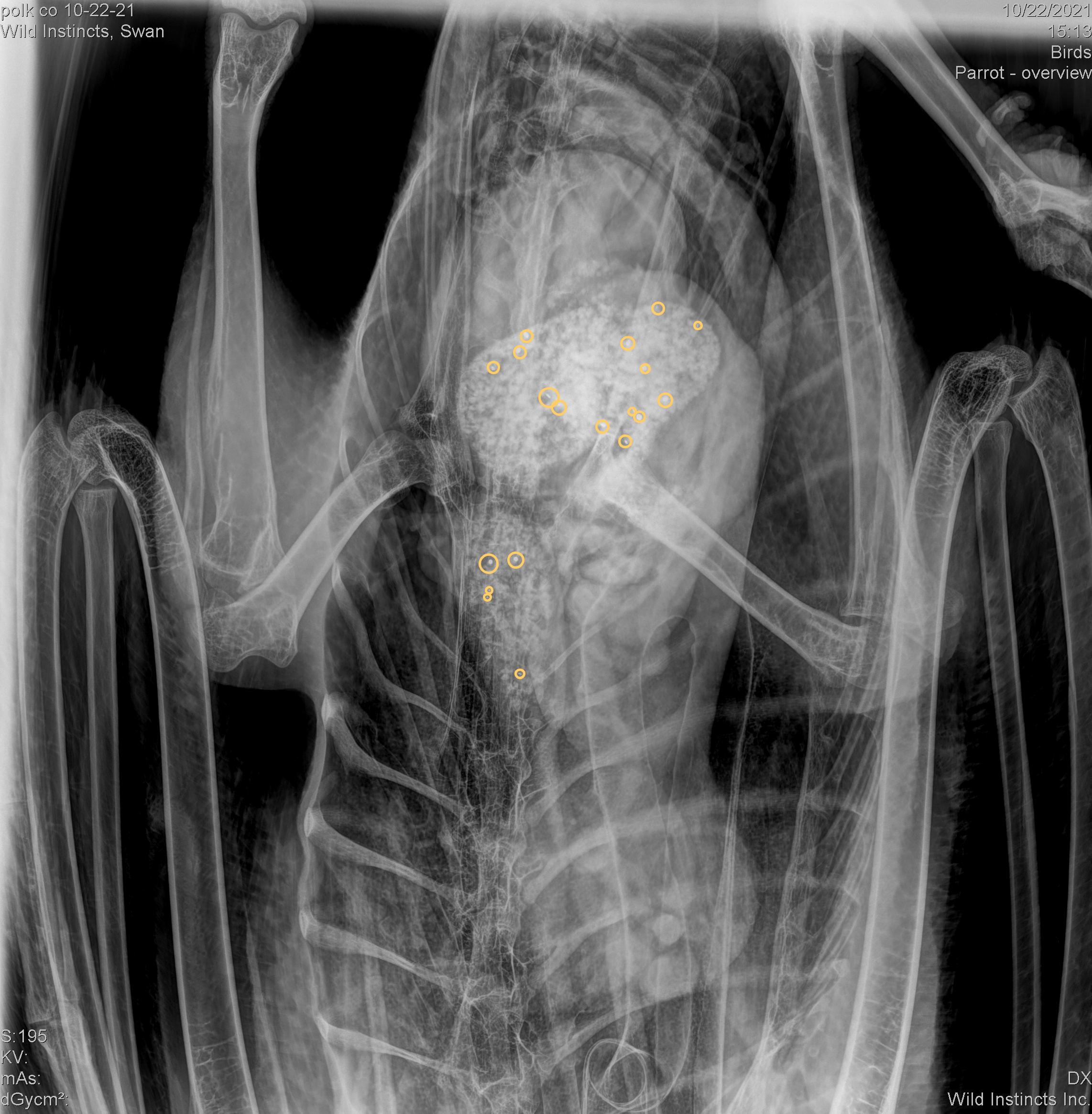
Over 19 discernible lead fragments were visible on the x-ray taken upon admission.
Like most lead poisoning victims, it was not shot. It ingested the lead in its system simply by feeding itself. The fragments were likely in the muddy bottom of the lake. While minding its own business, just foraging on the bottom, it dislodged the lead while it was eating vegetation.
Chelation was begun immediately. Chelation is the process to remove lead from the animal’s system. Like chemotherapy, chelation has serious side-effects. It removes good minerals and vitamins along with the lead. It is very hard on the bird. Sometimes the treatment is too much and they succumb.
This swan has received chelation treatment 43 of the last 45 days. In addition, it’s been tube-fed a special diet/vitamins to ensure proper nutrients and protection from chelation side effects. That’s 45 days of being handled and forcibly medicated. It’s not fun for any of us.

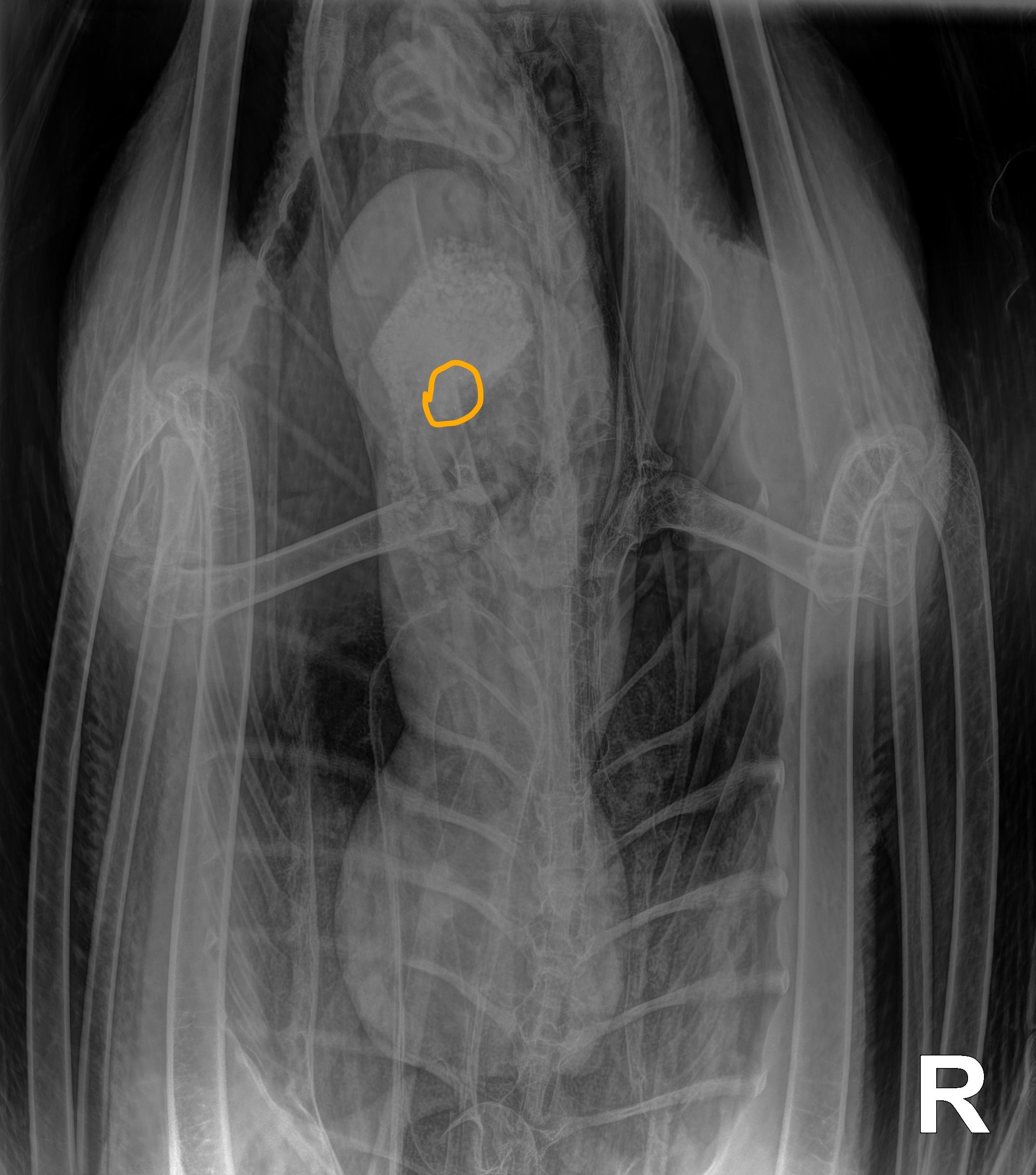
During the past 45 days, several x-rays have been taken to determine the status of the lead in the digestive tract as well as several blood lead level tests to monitor lead levels.


Eighteen days into treatment the lead test was still “HIGH”.
Today we’re happy to report the blood lead level was down to 21.9. There’s still a way to go, but finally what feels like progress.
Three blood lead tests = $28.50 ($9.50/test)
Six bottles of chelating agent = $180.00 ($30/bottle)
Special diet, vitamins, other medications = $35.00
Typical normal diet = $18.00
To care for this one swan so far is $261.50 in just food and meds alone.
This is what your money and support does when you donate to Wild Instincts. You make a difference. You have an impact.
A donation even a small as $6.00 would care for this swan for one day.
Please mark your calendar for Tues, Nov 30 and join us on Facebook to raise funds to help us help them.
 Wild Instincts
Leave a comment