
Trips to bear dens by wildlife biologists quite often have a fair amount of participants. It’s not an everyday occurrence, even for bear biologists. “The Boys” placement was no different. The young ladies who kept the cubs warm in their coats that cold night on January 11, 2012 were accompanied by their fathers. All four helped save “The Boys” lives so it was only fitting they see them try to be placed with a surrogate mom. Other guests invited by all parties involved brought the entourage number to about a dozen.

Mike, a retired biologist who suggested this den, had a GPS collar on the sow. She is a seven year old he has been following since she was a yearling. Bruce, another retired bear biologist, and Mark rounded out the “bear professionals”. What the other participants don’t realize is these three men each have been chemically immobilizing (tranquilizing) bears for decades. Close to 75 years of collective experience and still biologists never know exactly how things are going to transpire.
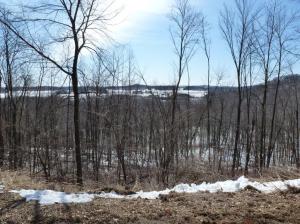
Most people see a very incorrect movie version of chemical immobilization. A tranquilizing dart magically reaches the perfect target and within moments the animal quietly falls over. This is not an accurate depiction.
To start, a couple people will quietly sneak up to the den to get a quick peek at what’s happening inside, if possible. The amount of chemical needed to immobilize an animal is weight-dependent so it helps to have an idea of what the bear might weigh. Seeing her gives one a rough idea of that; also it’s helpful to see what position she may be in or if she’s active.
It is imperative cubs being introduced into the den are not in the area until the surrogate sow is tranquilized. Any noise from them could initiate behavior from the sow we’d rather not see.
After determining the appropriate dose, a person quietly approaches again with a drug-filled syringe on a pole referred to as a jab stick or a pole syringe. The jab stick is extended into the den and the needle is pushed into the appropriate body part and the drug is expelled into the bear.

Remember, however, the bear is not always in a position to get a “good stick”. Certain areas of the body have less fat and allow the drug to work faster. Brush and debris hinder seeing what you’re doing. The needle doesn’t stay on tight, the needle bends, the plunger malfunctions or a number of other less than desirable things can happen. And of course, the bear may not want you to stick a needle in it!
After you think you have drugged the animal, everyone leaves the immediate area very quietly and gives the drug time to take effect. If there is noise or activity in the area, the animal can “burn-off” some of the drug, leaving you with a partially tranquilized, unhappy bear. It takes about 10 minutes for the drug to take effect. It’s not the instantaneous event depicted in the movies.
After 10 minutes transpire, someone sneaks over to check on the animal’s level of sedation. If necessary, either because of too little of a dose, a bad stick or metabolizing the drug, another stick is attempted. Review the paragraph before last to see the myriad of things that can go wrong while attempting to tranquilize an animal.
Wait another 10 minutes. Reassess.
Tranquilizing a wild animal is a lot of standing around and quietly waiting.
In this case, we had been warned in advance she was a very feisty bear. In years past, Mike had to physically block her in the den immediately after tranquilizing so she wouldn’t come out.
The first two attempts to tranquilize her failed due to her feistiness and equipment malfunctions. On the third attempt, she bolted.

At this point, no one knew if she had been successfully drugged or not. If she had, chasing her would burn off the drug. Waiting for the drug to take affect was the decision. Then they would track her in the snow and carry her back to the den.
After the allotted time, Mike & Bruce took a couple people with them and started to track her.
Meanwhile, Mark and the others went back to the vehicle to get the “The Boys”. Due to the extremely steep embankment covered with blackberry bushes to get down to the den, they could not be carried in their carrier. They had to be carried singly. Mark took The Big Guy and the forester who first found them took The Little Guy.

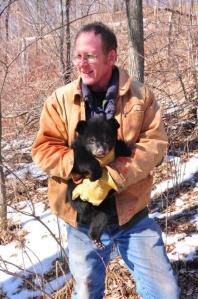
She had left two cubs in her den. They were slightly smaller than ours, but not by much-maybe a couple pounds. There wasn’t any point to pulling them out, sexing them, handling or disturbing them so they were left untouched.

Mark placed “The Boys” in the den. Normally, cubs go in the den and stay there. Ours, however, had been in rehab 58 days. They are quite developed and starting to explore. In rehab, we have to take them out of their “den” to feed them. In the wild, their mom is in their den and they don’t leave it until their mom says it’s time. “The Boys” weren’t sure they wanted to stay in their new home.
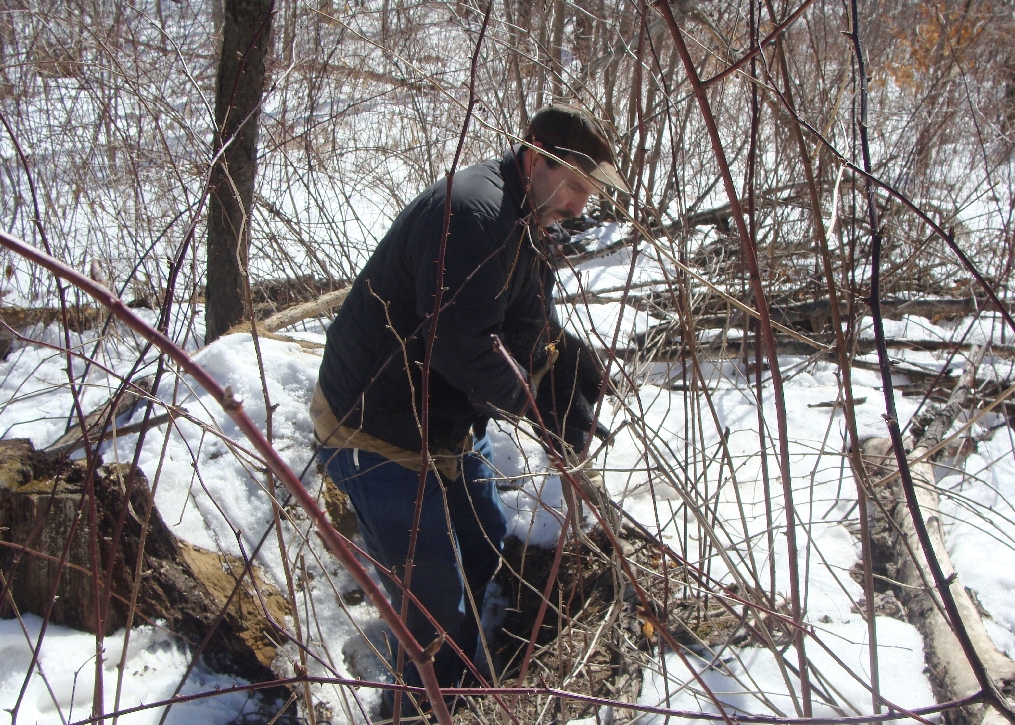
The Big Guy came out once and then stayed in. The Little Guy came out three times! On the third time, Mark was pretty sure he was going to be bringing “The Boys” back. He even had called for someone to come and help him carry them back up the hill. The Little Guy, however, decided to stay in his new home. Mark’s last look at them was all four of them curled up with each other, chortling.

While this was going on at the den, the crew out tracking the sow found had she circled around to come back to the den, but it was apparent she was not under the influence of any drug.
The best thing was to leave the area so she could come back to the den.
That’s how rehab is most times. We do our best and then don’t know if it was good enough. It’s difficult having to leave not knowing for sure if she came back; if “The Boys” stayed with their new siblings or tried to explore. We can only believe the best.
In this case, we do have a little more information to help us. On Saturday morning, Mike drove by the area to check the GPS collar. The sow had returned to the den.
Are there four cubs in that den with her?
We can only believe the best.

{a special thanks to Trish K and Ken P for some of the photos in this post}


 Wild Instincts
Leave a reply to Fritz Schubert Cancel reply