
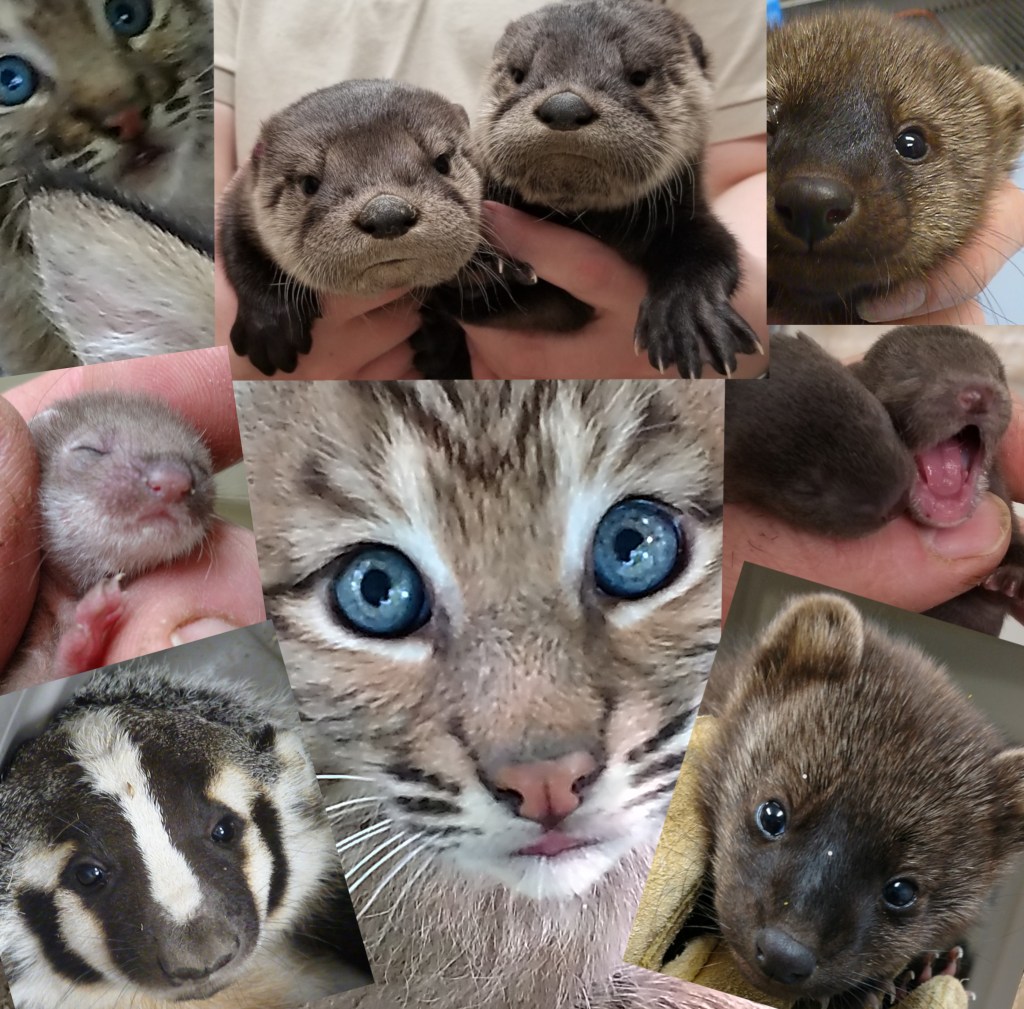
Amanda Falch, DVM, CCRT has created a Position Statement regarding the Felid & Mustelid rehab ban. Please consider electronically signing it by sending your full name, title, city and state to squirrelvet8@yahoo.com (you may have to cut and paste this address)Please share this widely. The more signatures, especially from WI, the bigger the impact. If there are enough signatures they may be presented at a Natural Resource Board meeting occurring next Wednesday. Thanks to Dr. Falch and all of you for helping us help them.
Position Statement on Felid and Mustelid Wildlife Rehabilitation in Response to SARS-CoV-2September 17, 2020BackgroundSince December 2019, a corona virus known as SARS-CoV-2 which causes COVID-19 in humans has rapidly spread across the globe causing serious illness and death in some individuals. As our knowledge of the virus has been rapidly evolving it is suspected that the virus uses the ACE2 receptor to attack the body. Many species other than humans also have this receptor and concern emerged early on about possible zooanthroponosis (reverse zoonosis).There have been documented cases of infection with the virus in dogs, cats, tigers, and mink. It has been shown that both cats and mink have the ability to pass the virus on to others of their species once infected. It is worth noting that while concerns exist there has not been a documented natural infection in a North American species. (https://www.aphis.usda.gov/…/sa…/sars-cov-2-animals-us)ConcernThe ability of some species to become infected and to potentially pass the virus on to others has led to concerns that this virus could become established in a native species, causing illness and death and/or potentially allowing that species to act as a reservoir for human infections.
Agency Response
Out of an “abundance of caution” some state agencies have halted rehabilitation of felids and mustelid species. This is being done even as the agencies acknowledge that the solitary nature of many of these species makes propagation of the virus in the wild less likely. Excerpt from COVID-19 and North American Species of Mustelidae, Felidae prepared by the Fish and Wildlife Health Committee of the Association of Fish and Wildlife Agencies: “Based on our current understanding of transmission pathways, the infection appears less likely to spread among animals with a solitary lifestyle (as occurs with many mustelids and felids) than among animals that live in social groups. There is no evidence at this time that such infections, if they occurred in individual wild mustelids, felids, or canids, would necessarily be maintained in populations of these species, or that SARS-CoV-2 would cause significant disease if established in these species.”
Implications
Limiting rehabilitation of species of concern could have unforeseen effects on public health by inadvertently increasing disease spread in these species while putting the untrained public at risk.Risks:1.) The public taking matters into their own hands. Individuals of young felid and mustelid species are vulnerable to orphaning and injury and people who find them will be able to interact with them in a way not possible with adults. If an individual is found in distress and the public is told there is no option but to leave the animal where it is found, they are very unlikely to do so. This puts the public at risk for rabies and other potential zoonotic illnesses and parasites. It increases the risk of domestic animals of acquiring illnesses like panleukopenia if a finder interacts with them as well as the wild animal. It increases the risk that the wild animal will suffer inhumane conditions as a result of malnutrition, habituation, inappropriate skill development for survival in the wild, and increases the risk of SARS-CoV-2 being introduced to the wild through an untrained, well intentioned person releasing an exposed individual back to the wild. 2.) Increased risk of rabies exposure without proper reporting. When a finder interacts with a wildlife rehabilitator he or she is asked about any potential exposure and is more likely to share this information with a wildlife rehabilitator trusted with helping an animal brought into care.3.) Habituated animals. Wildlife that is raised by an untrained person is more likely to be habituated. Habituation of these species can lead to dangerous human/animal encounters, domestic animal/wild animal encounters, and increased risk of disease spread into wild populations. 4.) Endangered species, like the American pine marten, which is already in jeopardy, could lose individuals to injury or orphaning unnecessarily due to lack of access to professional rehabilitation.5.) Even if a member of the public does not take an animal into care through the act of finding it and looking for help, he/she may expose an animal to SARS-CoV-2 that is then left to spread the virus in the wild.6.) When the public knows that professional advice is not available and that contact could lead to an animal being euthanized when it is in need of help, there will be increased interactions with the species without knowledge of rehabilitators who would be able to provide direction about normal and abnormal conditions and behaviors of an individual, and who could intervene in situations where animals would otherwise be held illegally by the public.7.) Free-ranging domestic cats which can carry the virus, given their numbers and exposure to people, should be considered a risk for wildlife exposure.
Recommendations
Wildlife rehabilitators provide a free and valuable resource to the public and to our wildlife. They are experienced, knowledgeable, individuals who have been trained, tested, and found to be qualified by state and federal agencies to rehabilitate wildlife when necessary. Rehabilitators understand species natural history and care needs and keep current with information on emerging disease. They are able to effectively educate the public on when to intervene and when to leave an animal in the wild and, because they are trusted by the public, finders are more willing to follow their instructions and are more willing to share information with them. Wildlife rehabilitators have a vested interest in the health of the individuals already in their care as well as in the populations those individuals will return to. Rehabilitators should be viewed as a resource of knowledge on the species for which they provide care, for the valuable public education and outreach they provide, for their willingness to implement necessary protocols to protect against spread of the virus, as well as to report if a virus is detected in an individual in their care—all at their own expense, as professional volunteers. They are likely to be the first to identify illness if signs of SARS-CoV-2 are developing in the population. We feel the expertise of these individuals is needed now more than ever to protect human and animal health during this pandemic. We recommend that state agencies utilize their skills to help prevent the spread of SARS Co-V-2 to wildlife by allowing them to rehabilitate felids and mustelids with appropriate disease mitigation strategies in place to ensure the safety of the animals as well as the people working with them.
Under these conditions we recommend authorized wildlife rehabilitators be allowed to accept, rehabilitate, and release felid and mustelid species:
1.) Appropriate use of personal protective equipment including but not limited to gloves, gowns, and face masks to be used when working with these species.
2.) Appropriate sanitation is implemented for all caging, bowls, linens, and enrichment items.
3.) Appropriate quarantine protocols are in place when new individuals are brought into care.
4.) People with any symptoms of COVID-19 are not allowed to work with these species while sick or under quarantine.
5.) The number of people working with these species in a rehabilitation setting is limited to decrease risk of exposure.
6.) Any respiratory symptoms in these species are recorded, monitored, and reported to the appropriate state agency.
7.) Appropriate protocols are in place if an individual develops respiratory symptoms while in care to limit exposure of other at-risk individuals8.) Non-traumatic sample collection can be provided when appropriate and requested by state agencies to further our understanding of SARS-CoV-2 in these species.


 Wild Instincts
Leave a reply to Barb Shelton Cancel reply